ServicesRoof Inspections
Roof Inspections in Chillicothe
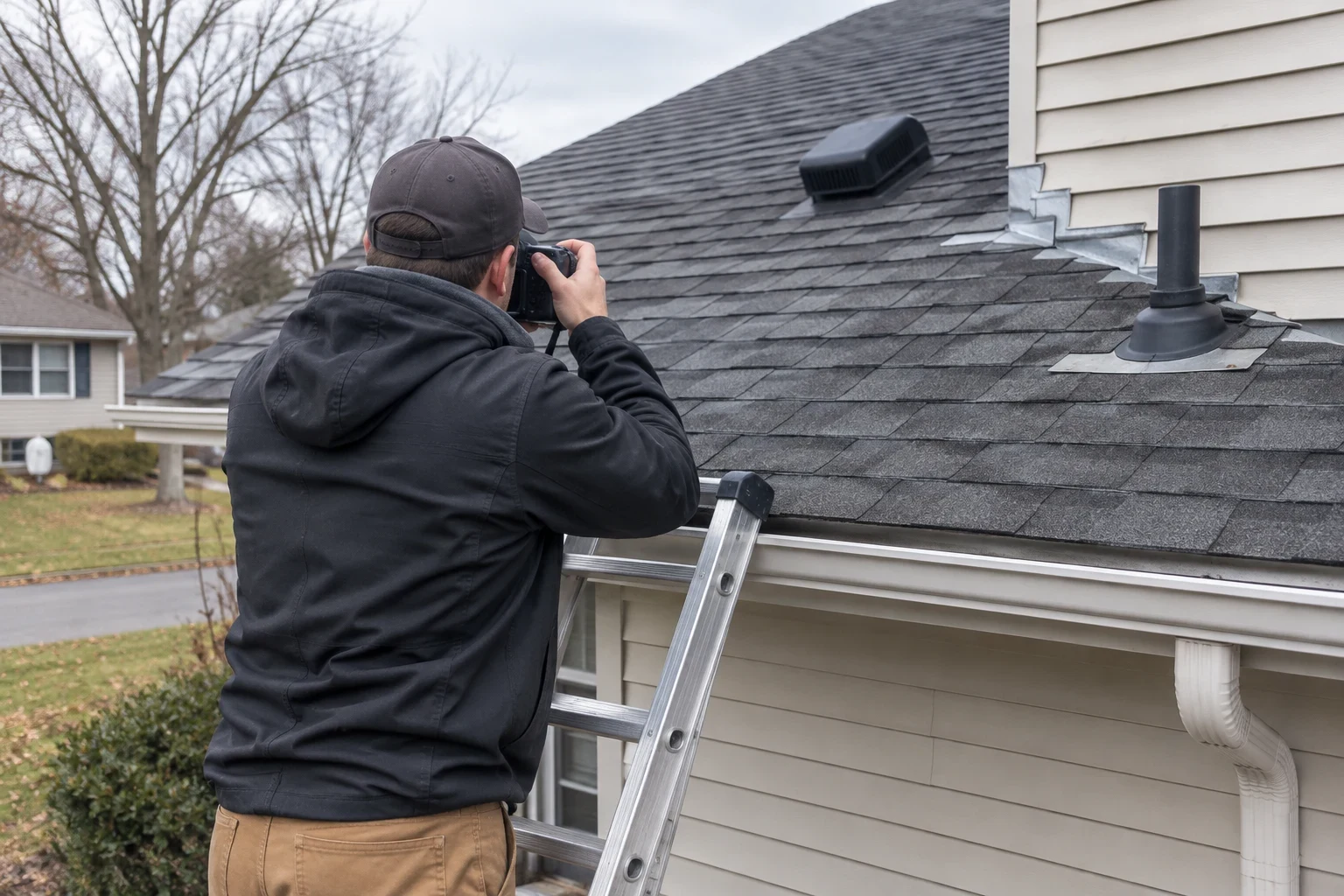
We look over your roof, check the flashing and gutters, and go into the attic, where ventilation and moisture problems often show up first. You get photos, a written report and a straight answer on whether anything needs attention now, later or not at all.
Why an inspection is worth the visit
Before you put money into your roof, it helps to know its real condition. We check the full system: the shingles or metal, the flashing at chimneys and vents, the gutters, the soffit and fascia along the eaves, and the attic below. Most of what turns up begins small, like a lifted shingle, a cracked pipe boot or a damp spot on the decking.
An inspection is also one of the clearest ways to understand comfort and running costs. When soffit vents are blocked or the attic cannot breathe, summer heat collects over your ceilings and your air conditioning works harder to keep up. In winter, warm air leaking into the attic melts snow from underneath and feeds ice dams at the eaves. When we see either, we show you where it is happening.
It is a sensible step when you are buying or selling a home, when your roof is getting older, after a hard Ohio winter, or when you want to know where things stand before choosing between roof repair and roof replacement.
What we check
Roof surface
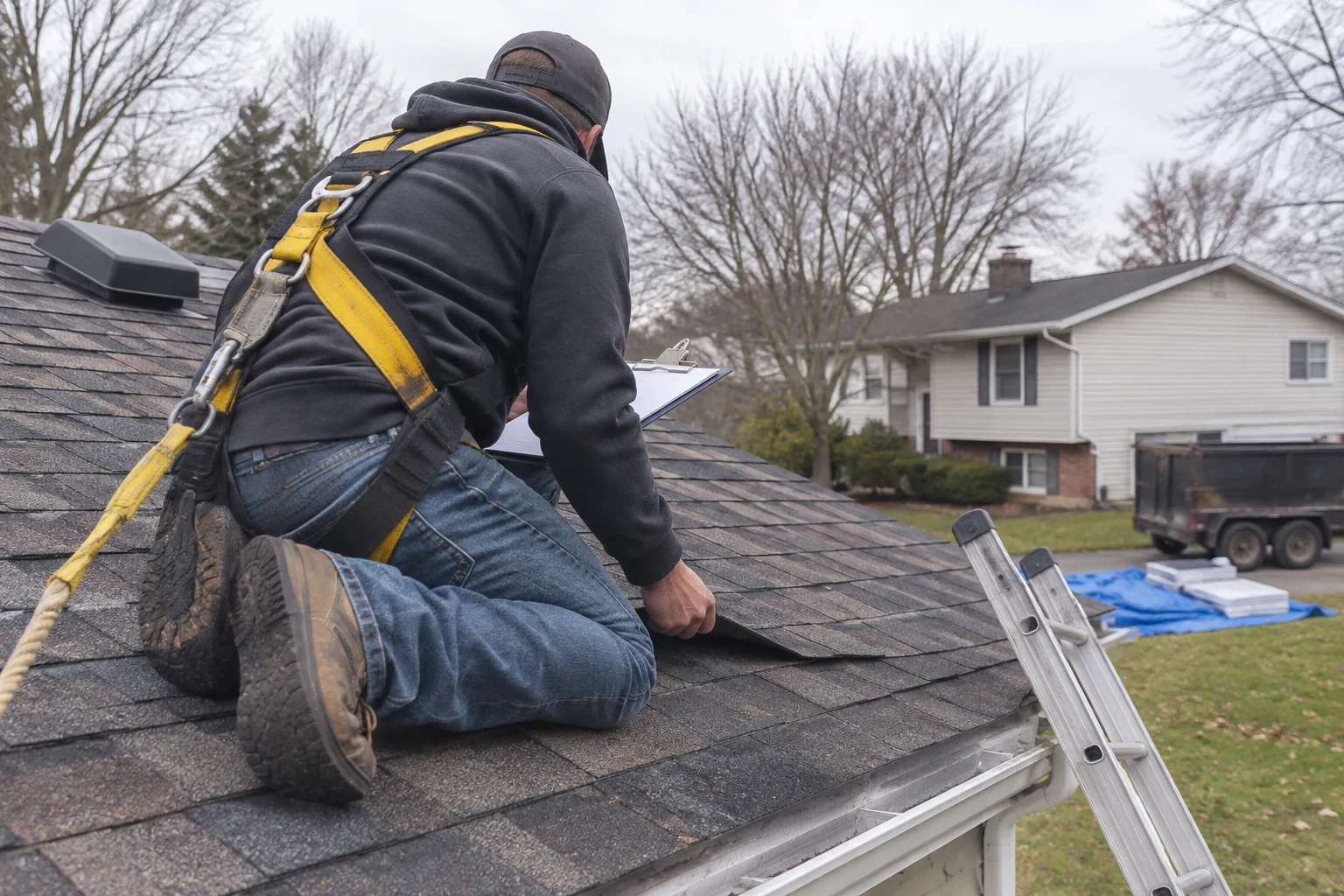
We look for granule loss, cracking, curling, nail pops and soft spots in the decking. On older roofs we also note how much life the material has left, so you can plan rather than react.
Flashing and penetrations
Chimneys, step flashing where the roof meets a wall, skylights and plumbing vent boots get a close look. These joints are where most leaks begin, often long before a stain appears inside.
Attic and ventilation
From inside, we check for daylight through the boards, water staining, mildew on the sheathing and frost marks from winter. We also look at whether intake and exhaust vents are balanced and whether insulation is packed against the soffit vents. This is where most of our comfort and energy findings come from.
Gutters, soffit and fascia
We check gutter pitch, downspout flow and fastening, along with rot or soft wood at the fascia boards and the condition of the soffit panels and vents.
Photo report in plain language
You receive photos of what we found and written notes sorted into what needs attention now, what should be planned for and what is simply worth watching. No jargon and no pressure.
Signs it is time for an inspection
- Ice dams or heavy icicles last winter
- Ice building at the eaves usually points to heat escaping into the attic. An inspection finds where it is leaking and whether water has worked under the shingles.
- Upstairs rooms that run hot
- If the second floor stays warm on summer evenings and cooling bills keep climbing, the attic may be trapping heat. Poor ventilation also shortens shingle life.
- Stains on ceilings or in the attic
- Even a faint ring deserves a look. The source is often some distance from the stain, and finding it early keeps the repair small.
- Granules in the gutters
- A gritty layer in the gutters or at the downspouts means shingles are wearing. We can tell you whether it is normal aging or something sooner.
- A roof past its middle years
- Once a roof has some age on it, a checkup helps you budget and avoid being caught off guard.
- Buying or selling a home
- A clear, photo-backed report gives both sides something solid to work from.
How an inspection visit goes
- 1
A short conversation by phone
We ask about the age of the roof, any leaks or stains, and what prompted the call. Then we set a time that works for you.
- 2
Outside and on the roof
Where it is safe and the shingles can take the weight, we walk the roof. Where walking would damage brittle or steep roofing, we inspect from ladders at the eaves instead. We step around plantings and keep ladders padded against your gutters.
- 3
In the attic
We need access to the attic hatch or pull-down stairs. We lay a drop cloth beneath it and leave the space as we found it.
- 4
Going over the findings
We walk you through the photos and explain what each one means. If something needs work, we describe the options, including whether a repair will do. The decision is yours, with no obligation.
What moves the price of an inspection
The cost of an inspection follows the time it takes to check your roof properly. We ask about your home during the phone call and tell you the price before we arrive, so nothing changes on the day.
- Square footage and steepness
- More roof area simply means more to cover. A steep pitch slows every step, and a roof we have to check from ladders at the eaves takes longer than one we can walk.
- Sections and mixed materials
- Additions, dormers and mixed materials, such as an older slate section beside asphalt shingles, add joints and flashing that each need a close look.
- Attic access
- An open attic is quick to check. A cramped crawl space or several separate attic areas add time.
- Report detail
- A pre-sale or pre-purchase report with fuller documentation takes more preparation than a routine checkup.
Questions before your inspection
- How long does an inspection take?
- On an average house, about one to two hours. That covers the roof, the attic and going through the photos with you afterward. Bigger roofs or homes with more than one attic take more time, and we give you a fair estimate of how long when you schedule.
- Do I need to be there?
- For part of it, yes, because we have to get into the attic. Being there at the end also helps, since looking at the photos side by side is the fastest way to clear up any questions.
- Are you going to sell me a new roof?
- No. Many roofs we look at need a minor fix or no work at all, and we say so directly. When a new roof really is the right call, we show you the photos and the reasons, and you make the decision.
- Can an inspection tell me why my energy bills are high?
- It can find the causes that come from the roof. Soffit vents covered by insulation, not enough exhaust venting and warm air slipping into the attic all make heating and cooling work harder. We show you what turned up and which fixes are worth paying for.
- Am I covered if the inspection turns into a job?
- We are insured and bonded, so your home is protected while our crew works on it. If you move ahead with a repair or a new roof, the materials carry lifetime material warranties and our labor carries a 10-year workmanship warranty.
- How often should a roof be inspected?
- A roof in good shape needs a check every few years, and more often as it gets older. Looking it over after a rough winter is especially worthwhile, since it finds freeze-thaw damage before spring rain gets to it.
Know where your roof stands
A careful inspection gives you facts, photos and a clear plan, whether the answer is a small fix or nothing at all. We set up visits around Chillicothe and nearby towns like Circleville and Waverly.